
Volleyball is one of the most popular team sports in the world. Millions of fans follow international competitions such as the Olympic Games, the Volleyball Nations League (VNL), the World Championships and continental championships.
While team rankings tell us which countries have the strongest national teams, many fans are also interested in knowing who the best individual volleyball players are.
However, Volleyball individual player rankings work differently from those in sports such as tennis. In tennis, players receive ranking points based on their results in tournaments, and these points determine their position in the international rankings. Volleyball does not have an equivalent universal system that gives every professional player a single overall world-ranking position.
Instead, international volleyball uses individual performance statistics to evaluate players in different categories. These categories include best scorer, best attacker, best blocker, best server, best setter, best receiver and best digger. Each category measures a different part of a player’s performance.
This raises an important question: Is there an official ranking of the world’s best volleyball players overall, or do fans have to compare players using separate performance categories? Understanding how the Fédération Internationale de Volleyball (FIVB) and Volleyball World publish these statistics helps answer this question.
Does Volleyball Have an Official International Individual Player Ranking?
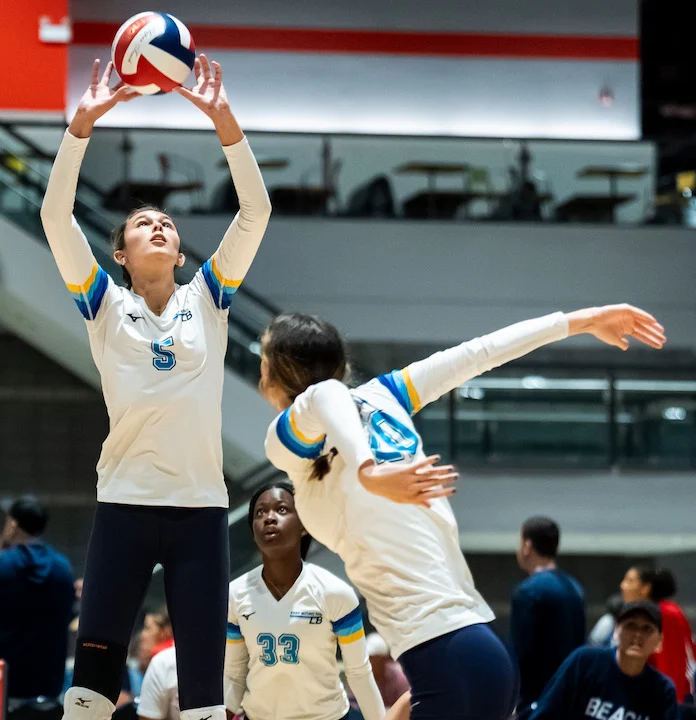
The short answer is no. There is currently no universal official FIVB individual world ranking that places all male or female volleyball players in one continuous list from number one onwards.
The FIVB, which is the international governing body of volleyball, maintains official world rankings for national teams. These rankings show the international standing of countries in men’s and women’s volleyball. However, they should not be confused with individual player rankings.
For individual players, the FIVB and Volleyball World publish performance statistics during international competitions. These statistics allow fans to compare players according to their specific skills and achievements.
For example, a player may rank first in scoring but may not rank among the top players in blocking or receiving. Similarly, a setter may lead the setter statistics without appearing near the top of the scoring chart.
This is why international volleyball does not have one official individual ranking that identifies a single player as the world’s best across every position and skill.
Difference Between Team Rankings and Individual Player Rankings
Team rankings and individual player statistics serve different purposes.
The FIVB World Ranking evaluates national teams according to their results in recognised international competitions. Its ranking system considers match results and the strength of opponents. It is designed to measure the competitive strength of national teams.
Individual player statistics, on the other hand, measure what players achieve on the court. They include points scored, successful attacks, blocks, service aces, successful sets, digs and reception performance.
For example, Brazil may have a higher position than another country in the FIVB men’s world ranking. This does not automatically mean that every Brazilian player is ranked higher than players from that country.
A national team can have several outstanding players, while a player from a lower-ranked team can lead an individual statistical category.
How Do International Volleyball Player Rankings Work?
International volleyball player rankings are mainly based on performance statistics collected during competitions.
When national teams compete in tournaments such as the Volleyball Nations League or the World Championship, match statistics are recorded. These statistics are then used to create individual performance tables.
Players are compared according to the number of successful actions they perform, their efficiency and other relevant measurements.
The main individual statistical categories used in international volleyball include:
- Best Scorers
- Best Attackers
- Best Blockers
- Best Servers
- Best Setters
- Best Diggers
- Best Receivers
These categories are published separately. A player can lead more than one category at the same time.
For example, an outside hitter may be the tournament’s leading scorer and best attacker. A middle blocker may lead the blocking statistics, while a setter may top the setting chart.
Let’s understand how each category works. While, here you can check out some of the recently active most famous male volleyball players.
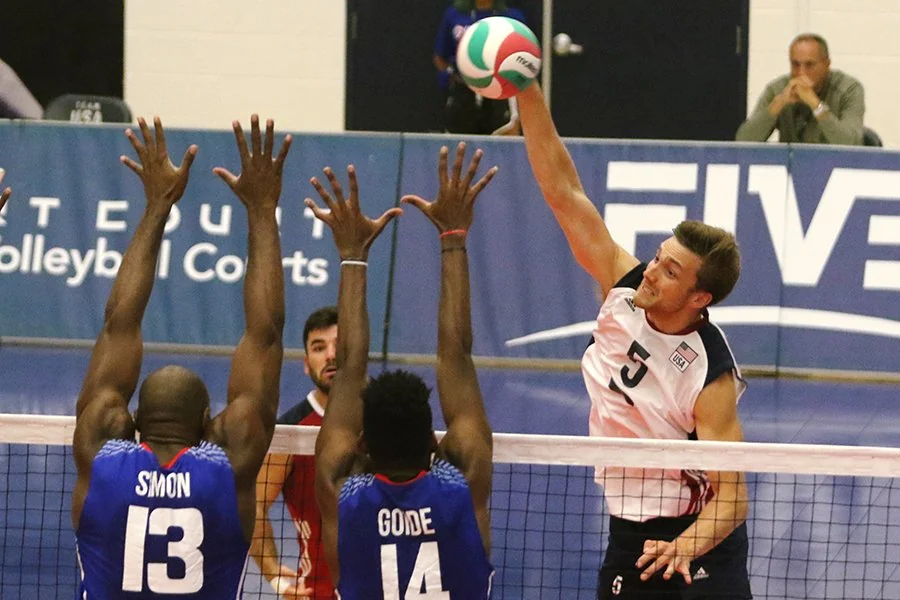
1. Best Scorer Ranking
The best scorer ranking identifies players who score the highest number of points during a competition.
In volleyball, a player can score points in three main ways:
- Attack points: When a player successfully attacks the ball and wins a point for their team.
- Block points: When a player blocks an opponent’s attack and the ball lands on the opponent’s side or otherwise results in a point.
- Service aces: When a player serves the ball in a way that directly wins a point.
The total scoring points are calculated using this formula:
Total Points = Attack Points + Block Points + Service Aces
For example, consider three players participating in an international tournament:
| Player | Attack Points | Block Points | Service Aces | Total Points |
|---|---|---|---|---|
| Player A | 120 | 15 | 12 | 147 |
| Player B | 110 | 20 | 18 | 148 |
| Player C | 125 | 10 | 8 | 143 |
Player B ranks first with 148 points, followed by Player A with 147 points.
The best scorer ranking is useful because it shows which players have contributed the most points through their individual actions.
However, it does not necessarily identify the best all-round player. A setter or libero may contribute significantly to a team’s success without scoring as many points as an outside hitter or opposite hitter.
2. Best Attacker Ranking
The best attacker ranking evaluates players according to their attacking performance, particularly successful spike attacks.
Attacking is one of the most important skills in volleyball. Players attempt to hit the ball into the opponent’s court in a way that makes it difficult or impossible to return.
However, simply counting successful attacks does not always provide a complete picture of a player’s attacking ability.
A player may score many attack points because they attempt a large number of attacks. Another player may score fewer points but make better use of every opportunity.
Therefore, attacking statistics can include:
- Successful attacks or kills.
- Total attack attempts.
- Attack errors.
- Attack success percentage.
- Average attack points per match or set.
How Is Attack Efficiency Calculated?
A useful measure of attacking performance is attack efficiency.
Attack Efficiency = (Kills − Attack Errors) ÷ Total Attack Attempts × 100
For example:
| Statistic | Player A | Player B |
|---|---|---|
| Successful Attacks | 45 | 38 |
| Attack Errors | 12 | 4 |
| Total Attempts | 90 | 60 |
| Attack Efficiency | 36.67% | 56.67% |
Player A scores more successful attacks, but Player B has better attack efficiency.
This shows why the number of successful attacks alone does not tell the whole story.
It is also important to understand that the official tournament’s best attacker chart may rank players using successful attack totals rather than the efficiency formula above. The statistical columns should be checked separately instead of assuming that every tournament uses one combined efficiency score.
3. Best Blocker Ranking
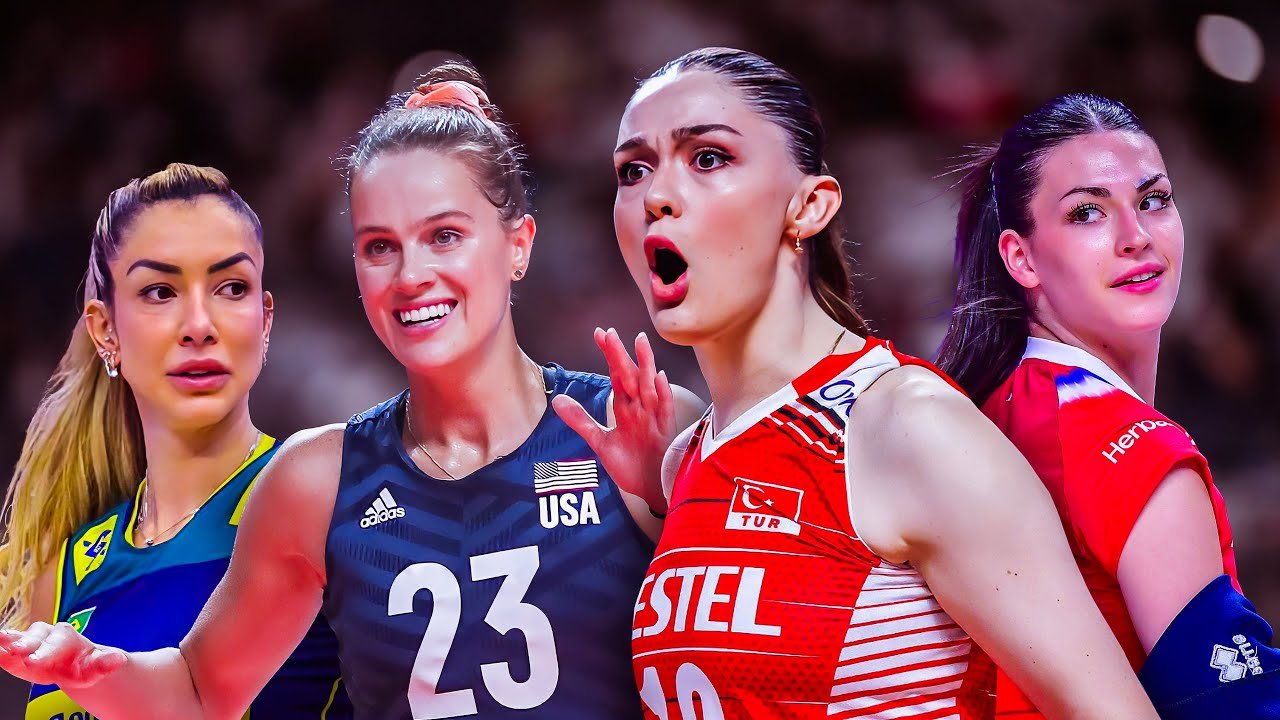
The best blocker ranking identifies players who are most successful at stopping their opponents’ attacks near the net.
Blocking is an important defensive skill. Players jump close to the net and use their hands to prevent the opposing team from successfully attacking the ball.
A successful block can directly win a point. These are generally recorded as block points or kill blocks.
For example:
| Player | Successful Block Points | Tournament Rank |
|---|---|---|
| Player A | 35 | 1 |
| Player B | 29 | 2 |
| Player C | 24 | 3 |
Player A ranks first because they have recorded the highest number of successful block points.
Middle blockers are particularly important in this category because blocking is one of their main responsibilities.
However, other positions can also contribute to blocking statistics.
A player who touches the ball during a block but does not directly win the point is not necessarily credited with a successful block point. Therefore, the number of block points is different from the total number of block touches.
4. Best Server Ranking
The best server ranking evaluates players according to their serving performance.
A serve starts every rally, and a strong serve can put the opposing team under pressure before it has an opportunity to organise an attack.
The most important serving statistic is the service ace.
A service ace occurs when a serve directly wins a point. This may happen because the receiving team fails to touch the ball or cannot return it successfully.
Serving statistics may include:
- Total service aces.
- Service errors.
- Total service attempts.
- Service aces per set.
- Serving performance percentages.
For example:
| Player | Service Aces | Service Errors |
|---|---|---|
| Player A | 25 | 12 |
| Player B | 20 | 4 |
| Player C | 18 | 6 |
Player A has the most service aces. However, Player B has fewer serving errors.
This is an important distinction because the most aggressive server is not necessarily the most consistent server.
5. Best Setter Ranking
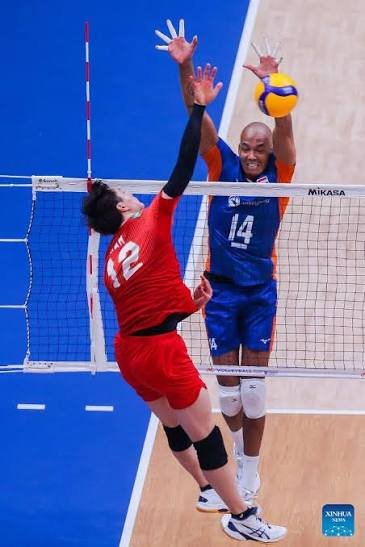
Setters play a different role from attackers and blockers.
Their main responsibility is to organise the team’s attacks by delivering the ball to teammates in a position where they can hit it effectively.
A setter usually touches the ball during the second contact of a team’s attacking sequence. They decide which teammate should receive the ball and where it should be placed.
The setter’s performance can be evaluated through:
- Successful sets.
- Setting errors.
- Setting accuracy.
- Ability to create attacking opportunities.
- Consistency in delivering playable balls.
International tournament statistics may rank setters by successful sets.
For example:
| Player | Successful Sets | Tournament Rank |
|---|---|---|
| Player A | 250 | 1 |
| Player B | 230 | 2 |
| Player C | 215 | 3 |
Player A leads the setting statistics because they have recorded the highest number of successful sets.
However, a higher number of successful sets does not automatically mean that a setter is better in every aspect. The quality of the sets, decision-making and ability to distribute the ball effectively are also important.
6. Best Digger Ranking
Digging is an important defensive skill in volleyball.
A dig occurs when a player successfully receives or saves an opponent’s attack, usually a spike, before the ball touches the floor.
Players who are good at digging can prevent opponents from scoring easy points. They also help their teams continue rallies and create opportunities for counterattacks.
The best digger ranking generally considers the number of successful digs.
For example:
| Player | Successful Digs | Tournament Rank |
|---|---|---|
| Player A | 110 | 1 |
| Player B | 98 | 2 |
| Player C | 90 | 3 |
Player A ranks first in digging because they have recorded the highest number of successful digs.
Liberos and defensive specialists are particularly important in this category, although players in other positions can also make successful digs.
A high number of digs is useful, but it should also be considered alongside the number of defensive opportunities a player has faced.
7. Best Receiver Ranking
Receiving is another important part of volleyball.
When an opponent serves the ball, the receiving team must control it and pass it towards the setter. A good reception allows the setter to organise an effective attack.
A poor reception can make it difficult for the team to attack properly.
The best receiver ranking evaluates players according to their reception performance.
Important statistics include:
- Successful receptions.
- Reception errors.
- Total reception attempts.
- Positive or excellent receptions.
- Reception efficiency.
For example:
| Player | Positive Receptions | Reception Errors | Total Attempts |
|---|---|---|---|
| Player A | 75 | 5 | 100 |
| Player B | 80 | 12 | 110 |
| Player C | 65 | 3 | 80 |
Player B has the highest number of positive receptions, but Player A has a lower error rate.
This demonstrates why reception totals and reception efficiency should be considered separately.
Outside hitters and liberos are usually heavily involved in serve reception.
Does Volleyball Have an Overall Individual Player Ranking?
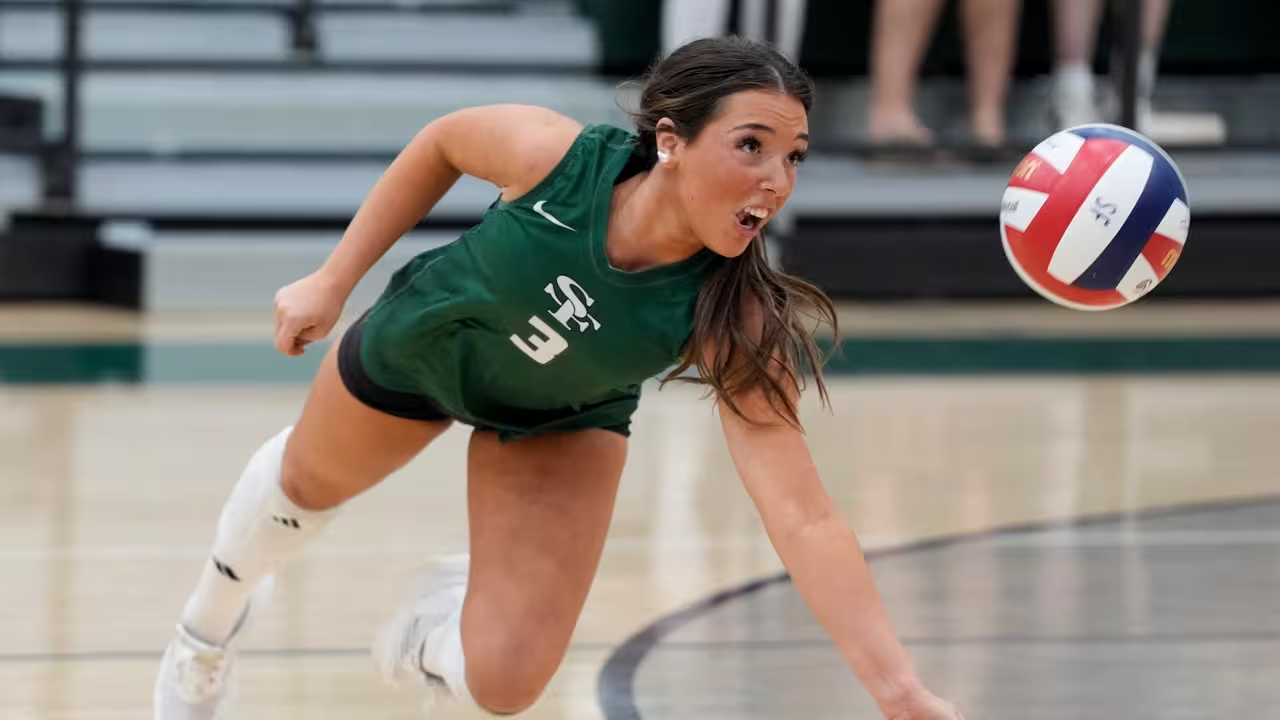
Although international volleyball publishes several individual statistical rankings, it does not currently have a universal official system that combines all these statistics into one overall player ranking.
This is mainly because volleyball players have different responsibilities.
An opposite hitter is expected to contribute heavily to attacking. A middle blocker is particularly important in blocking. A setter is responsible for creating attacking opportunities, while a libero focuses on reception and defence.
Comparing all these players using only their total points would be unfair.
For example, a libero may be one of the most valuable players in an international competition but may score very few points. A middle blocker may lead the blocking statistics without appearing among the top scorers.
Similarly, a setter may not score many points but can play a major role in helping their teammates score.
Therefore, the absence of a single official overall ranking does not mean that players cannot be compared. It means that a fair comparison requires more than one statistical measure.
How Can the Best Overall Volleyball Player Be Identified?
To identify the best overall volleyball player, it is necessary to consider several aspects of performance rather than relying on one statistical category.
A player who performs consistently in different areas may be more valuable overall than someone who leads only one category.
A possible independent evaluation system could consider the following factors:
| Performance Category | Suggested Weight |
|---|---|
| Attacking | 30% |
| Blocking | 15% |
| Serving | 10% |
| Reception | 15% |
| Defence and digging | 15% |
| Setting and playmaking | 15% |
| Total | 100% |
These weights are only an example of a proposed model, not an official FIVB calculation. They would also need adjustments according to playing position.
For instance, a libero should not receive a poor overall rating simply because they have few attack points. Similarly, a setter should be evaluated more heavily on setting and playmaking.
A fair international player comparison would therefore need to consider a player’s position, playing time, number of opportunities, performance efficiency and contribution to the team.
It would also be useful to compare players across several tournaments rather than judging them on a single competition.
Does Playing More Matches Affect Individual Player Rankings?
Yes, playing more matches can have a significant effect on cumulative individual statistics.
For example, imagine two players competing in an international tournament.
| Statistic | Player A | Player B |
|---|---|---|
| Matches Played | 10 | 5 |
| Total Points | 150 | 100 |
| Points Per Match | 15 | 20 |
Player A has scored more total points, but Player B has a higher scoring average.
This is why total statistics and average statistics should not be confused.
A player who participates in more matches has more opportunities to score points, make blocks, serve aces and record successful digs.
However, not every tournament ranking uses the same measurement. Some categories use cumulative totals, while others may include averages, percentages or minimum participation requirements.
When comparing players, it is important to check the statistical method used by the competition.
Does a Player’s Position Affect Their Individual Ranking?
Yes. A player’s position has a major influence on which performance statistics are most relevant.
Volleyball has five main playing positions: outside hitter, opposite hitter, middle blocker, setter and libero.
Outside Hitter
Outside hitters are among the team’s main attacking players. They also contribute to serve reception and defence.
Their performance is commonly evaluated through attack points, attack efficiency, reception and defensive contributions.
Opposite Hitter
Opposite hitters are important attacking players, particularly when the team needs points from difficult situations.
Their main performance measures include attack points, attack efficiency and serving.
Middle Blocker
Middle blockers focus on stopping the opponent’s attacks near the net. They also contribute to quick attacks.
Their most relevant statistics include successful blocks, attack points and blocking performance.
Setter
Setters organise the team’s attacking play. Their main responsibility is to deliver accurate sets and make good decisions.
Their performance is evaluated through successful sets, setting accuracy and playmaking.
Libero
The libero is a specialist defensive player who wears a different-coloured jersey.
Liberos focus mainly on serve reception and defence. They are not normally used as primary attackers or blockers.
Their performance is evaluated through successful receptions, digs and defensive consistency.
Because these positions have different responsibilities, a fair overall ranking should take positional differences into account.
What Is the Difference Between MVP and the Best Statistical Player?
MVP stands for Most Valuable Player.
It is an award given to the player considered most valuable during a particular tournament or competition.
The MVP is not necessarily the player who finishes first in the best scorer ranking.
For example, an outside hitter may lead the scoring statistics, but a setter may receive the MVP award because of their influence on the team’s performance.
Similarly, a player may contribute through attacking, blocking, serving and leadership without topping any single statistical category.
MVP selection recognises overall value rather than simply rewarding the player with the highest number in one statistical table.
It is important to understand that an MVP award is not the same as an official individual world ranking. It recognises performance in a particular competition.
Where Can You Check International Volleyball Player Rankings and Statistics?
Fans who want to compare international volleyball players can use official tournament statistics published by Volleyball World and the FIVB.
The most useful sources include:
1. Volleyball Nations League (VNL)
The VNL publishes individual statistics for men’s and women’s competitions. Fans can check best scorers, attackers, blockers, servers, setters, diggers and receivers.
2. FIVB Volleyball World Championships
World Championship statistics provide information about individual player performance during the competition. They help identify leading players in different statistical categories.
3. Olympic Games
Olympic volleyball statistics allow fans to compare players who represent their countries at the world’s biggest sporting event.
4. Official FIVB World Rankings
These rankings are useful for checking the international standing of national teams. They should not be confused with individual player rankings.
Frequently Asked Questions About Volleyball Individual Player Rankings
Is there a No. 1 volleyball player in the world?
There is no universally recognised official FIVB individual world ranking that identifies one player as the world’s No. 1. Players are ranked separately in tournament performance categories, while MVP awards recognise outstanding overall performances in individual competitions.
Does FIVB rank individual volleyball players?
FIVB and Volleyball World publish individual performance statistics during international competitions. These include scoring, attacking, blocking, serving, setting, digging and receiving. However, these statistics do not form one universal individual world ranking.
Who is the best volleyball player in the world?
There is no single official answer. The best player depends on the position, competition, performance statistics and criteria used for comparison. MVP awards and tournament statistics can help identify outstanding players.
What is the difference between best scorer and best attacker?
The best scorer ranking includes points from attacks, blocks and service aces. The best attacker ranking focuses specifically on successful attacks. Therefore, a player can be the leading scorer without being the leading attacker.
Can a libero become the best volleyball player?
Yes. A libero can be considered one of the best or most valuable players in a tournament because of their exceptional defensive and reception skills. However, they are unlikely to lead scoring statistics because their position has a different role.
Does the best scorer always win the MVP award?
No. The MVP is selected based on overall value to the team and tournament performance. A player who leads scoring statistics does not automatically receive the award.
How are international volleyball players compared?
Players can be compared through individual statistics such as points, successful attacks, attack efficiency, blocks, service aces, successful sets, digs and receptions. Their positions, playing time and consistency should also be considered.
Where can I find official volleyball player statistics?
Volleyball World publishes official statistics for major international competitions, including the Volleyball Nations League and World Championships. The FIVB website also provides national team world rankings.
Conclusion
International volleyball does not have one universal individual player ranking that places every player in the world in a single order. Instead, the FIVB and Volleyball World use separate statistical categories to evaluate individual performance during international competitions.
These categories include best scorer, best attacker, best blocker, best server, best setter, best digger and best receiver. Each category measures a different skill, allowing fans to understand how players contribute to their teams.
If you want to identify the best overall volleyball player, you need to look beyond one statistical ranking. Attacking, blocking, serving, reception, defence, setting, consistency and contribution to team success all matter.
Ultimately, the best volleyball player is not necessarily the one who scores the most points. It is the player who makes the greatest contribution to their team’s performance, taking their position and responsibilities into account.