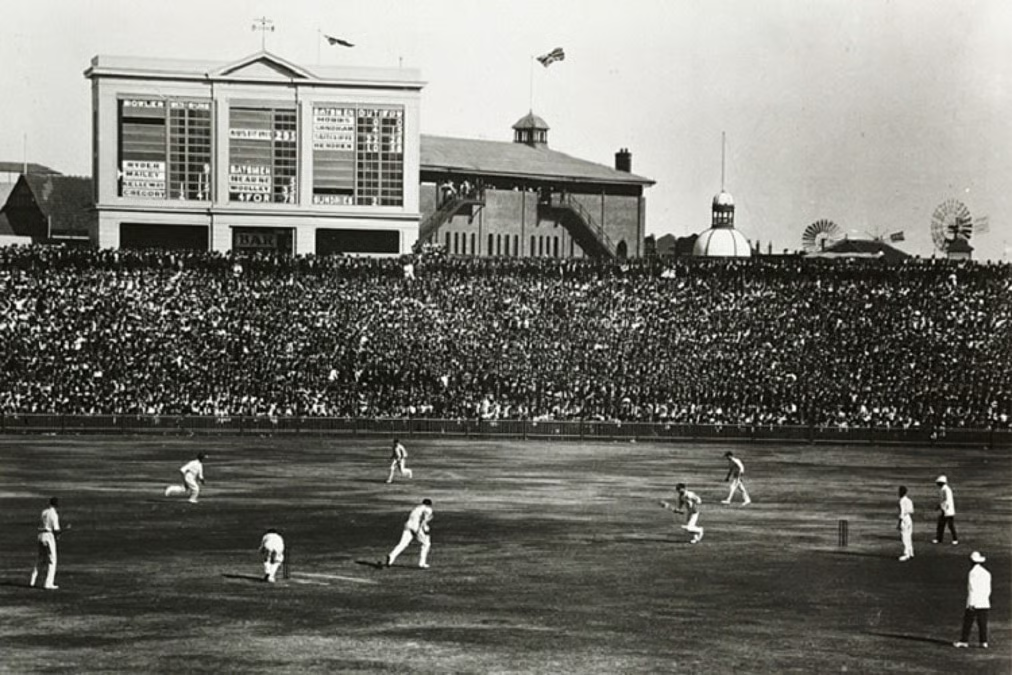
Imagine a cricket match played nearly 150 years ago that would become the starting point of one of the world’s most enduring sporting traditions. There were no television cameras, no modern protective equipment, no decision-review technology and no global cricket rankings. Yet, when Australia faced England in March 1877, history was made.
Australia won the first officially recognized international Test cricket match by 45 runs at the Melbourne Cricket Ground (MCG). The contest produced several remarkable milestones, including the first Test century, the first wicket in Test history and a decisive seven-wicket bowling performance that secured Australia’s victory.
What began as a contest between two national teams eventually developed into a format followed by millions of cricket fans worldwide. The match also laid the foundations for the historic Australia–England rivalry that continues to shape international cricket.
Key Highlights of the First Test Cricket Match
- First-ever Test match: Australia vs England, played from 15 to 19 March 1877.
- Venue: Melbourne Cricket Ground, Melbourne, Australia.
- Final result: Australia won by 45 runs.
- First Test century: Charles Bannerman scored 165 runs for Australia.
- First wicket in Test history: England’s Allen Hill dismissed Australian batter Nat Thomson.
- First five-wicket haul in Test cricket: Australia’s Billy Midwinter took five wickets in England’s first innings.
- Match-winning bowling performance: Tom Kendall took seven wickets for 55 runs in England’s second innings.
- Historic first: The match established the beginning of officially recognized men’s Test cricket.
These achievements make the match far more than an old scorecard. It represents the beginning of a cricketing tradition built around patience, skill, endurance and tactical competition.
When Was the First-Ever Test Cricket Match Played?
The first officially recognized men’s Test cricket match was played between Australia and England from 15 to 19 March 1877 at the Melbourne Cricket Ground in Melbourne, Australia.
Australia won the match by 45 runs after defending a target of 154. Although the match took place over five calendar dates, no play occurred on 18 March. The contest was played under the conditions of its era and is recognized as the beginning of Test cricket’s official history.
It is important to distinguish the first Test match from the first international cricket match of any kind. International cricket between the United States and Canada dates back to 1844. However, the 1877 match between Australia and England is recognized as the first Test match in men’s international cricket.
Why Did Australia and England Play the First Test?
During the 19th century, cricket was becoming increasingly popular in England and Australia. Touring teams travelled long distances to play matches, allowing spectators to watch leading cricketers from overseas and encouraging competition between the two countries.
England had already sent cricket teams to Australia, while Australian cricketers were becoming increasingly competitive. These tours helped establish a sporting relationship that would eventually develop into one of cricket’s most enduring rivalries.
The 1876–77 English tour of Australia included matches against local sides and two fixtures that are now recognized as the first and second Test matches. The inaugural contest was not originally organized under today’s international cricket administration. Its historical importance became clearer as Test cricket developed into an established international format.
At that time, there were no international rankings, television broadcasts, modern review systems or global championship structures. Players competed under the laws and conventions of their period, and the match later became the starting point for Test cricket’s official records.
Where Was the First Test Match Played?
The historic match took place at the Melbourne Cricket Ground, commonly known as the MCG. Located in Melbourne, Australia, the ground was already an important sporting venue when Australia and England met there in 1877.
The MCG remains one of the most recognizable cricket venues in the world. Its place in cricket history is particularly significant because it hosted both the first officially recognized Test match in 1877 and the first One Day International in 1971.
The stadium has changed considerably since the 19th century. Modern seating, electronic scoreboards, floodlights, broadcast facilities and other developments have transformed the venue. Nevertheless, its association with the origins of Test cricket remains central to its identity.
The Teams and Their Captains
Australia and England each fielded 11 players in the inaugural Test. Because the match established the format’s historical record, many of the participants were making their Test debuts.
Australia
Captain: Dave Gregory
Dave Gregory led the Australian team on home soil. Australia won the toss and elected to bat first, a decision that ultimately helped the hosts establish a first-innings advantage.
Charles Bannerman became the outstanding performer with the bat, while Tom Kendall later played a decisive role with the ball. Australia combined a remarkable individual batting performance with crucial wickets at the right moments to secure victory.
England
Captain: James Lillywhite Jr.
James Lillywhite Jr. captained the touring English side. He was an experienced professional cricketer and is recognized as England’s first Test captain.
England’s team included established players such as Alfred Shaw, Tom Emmett, George Ulyett and James Southerton. Although England managed to compete during parts of the match, the team ultimately fell short while chasing Australia’s second-innings target.
Full Scorecard of the First Test Match
The match produced four completed innings. Australia scored 245 in its first innings, England replied with 196, Australia added 104 in its second innings, and England was dismissed for 108 while chasing 154.
Australia vs England — First Test, 1877
- Venue: Melbourne Cricket Ground, Melbourne, Australia
- Dates: 15–19 March 1877
- Australia first innings: 245 all out
- England first innings: 196 all out
- Australia second innings: 104 all out
- England second innings: 108 all out
- Result: Australia won by 45 runs.
Australia First Innings: 245 All Out
Australia’s first innings became the defining part of the match because of Charles Bannerman’s extraordinary performance.
Bannerman scored 165 runs, facing 285 deliveries and hitting 18 fours. He contributed approximately 67.3% of Australia’s total of 245 runs. No other Australian batter reached 20 runs in that innings.
The innings also contained an important early moment in Test history. England’s Allen Hill bowled Australian opener Nat Thomson for one run, recording the first wicket in a Test match.
Australia’s innings eventually ended at 245 after 169.3 overs under the scoring conventions of the period.
England First Innings: 196 All Out
England responded with 196 runs, leaving Australia with a first-innings lead of 49.
Harry Jupp led England’s batting effort with 63 runs from 241 balls. Harry Charlwood added 36, while Allen Hill remained unbeaten on 35. England demonstrated that it could compete with Australia, but the team could not match Bannerman’s substantial contribution.
Australian all-rounder Billy Midwinter was particularly effective with the ball, taking five wickets for 78 runs. His performance made him the first bowler to claim a five-wicket haul in Test cricket.
Australia Second Innings: 104 All Out
Australia’s second innings was much shorter and more difficult. The team was dismissed for 104 in 68 overs, with Tom Horan scoring 20 and Tom Kendall contributing 17 not out.
England’s Alfred Shaw took five wickets for 38 runs, becoming the first England bowler to record a five-wicket haul in a Test innings. George Ulyett also took three wickets.
Although Australia struggled with the bat, its first-innings advantage proved crucial. The team’s overall lead reached 153 runs, setting England a target of 154 for victory.
England Second Innings: 108 All Out
England’s chase began badly. The team lost early wickets and could not build the sustained partnerships required to reach the target.
Wicketkeeper John Selby top-scored with 38, while George Ulyett contributed 24. However, Australia’s Tom Kendall produced a decisive bowling performance, taking seven wickets for 55 runs. John Hodges claimed two more wickets as England was dismissed for 108.
England fell 45 runs short of the target, giving Australia victory in the first Test match. Kendall’s seven-wicket innings remains one of the central performances in the story of the inaugural Test.
Charles Bannerman: The First Test Cricket Centurion
Charles Bannerman achieved a landmark in cricket history by becoming the first batter to score a century in Test cricket. His 165-run innings in Australia’s first innings remains one of the most significant individual performances in the history of the format.
Bannerman faced 285 balls and hit 18 fours. His contribution was remarkable because it accounted for more than two-thirds of Australia’s first-innings total. In a sport where runs are generally shared among several batters, his innings was an exceptional example of individual dominance.
Bannerman continued batting for much of the innings but eventually retired hurt after a delivery from George Ulyett injured the index finger of his right hand. He did not return to bat in that innings.
His score of 165 was the highest individual score of the match. More importantly, it established the tradition of the Test century as one of cricket’s most respected individual milestones.
Tom Kendall’s Match-Winning Bowling Performance
While Bannerman gave Australia its first major advantage, Tom Kendall helped secure the victory.
Kendall took seven wickets for 55 runs in England’s second innings. England had a target of 154, but his bowling repeatedly disrupted the batting lineup and prevented the visitors from building a match-winning partnership.
Kendall’s performance was particularly significant because it helped determine the result of the first officially recognized Test match. The historic contest therefore began with two memorable individual achievements: Bannerman’s pioneering century and Kendall’s decisive seven-wicket haul.
His contribution demonstrated the importance of bowling in Test cricket, where teams must dismiss the opposition rather than simply restrict its scoring rate.
Day-by-Day Timeline of the First Test
The match was played over four days of actual cricket, with no play on 18 March. Historical records describe it as a timeless match, meaning it was not governed by the modern five-day limit in the same way as today’s standard Tests.
15 March 1877: The Opening Day
Australia began its innings after winning the toss and choosing to bat. England’s Allen Hill made history by taking the first wicket in Test cricket, dismissing Nat Thomson for one run.
Charles Bannerman then produced an outstanding batting performance. By the close of the opening day, Australia had reached 166 for six wickets, with Bannerman unbeaten on 126 and Jack Blackham on three.
16 March 1877: Australia Finishes Its Innings
Bannerman continued his innings before eventually retiring hurt with a finger injury. Australia completed its first innings for 245 runs.
England began its response and reached 109 for four wickets by the end of the day’s play. Harry Jupp had already made a significant contribution and remained unbeaten on 54.
17 March 1877: England’s First Innings Ends
England’s first innings ended at 196, giving Australia a lead of 49 runs.
Australia then returned to bat but struggled to build partnerships. The hosts lost wickets quickly and finished the day at 83 for nine, leaving the match closely contested despite their first-innings advantage.
18 March 1877: No Play
There was no play on 18 March. The teams returned to the field the following day to complete the match.
19 March 1877: Australia Secures Victory
Australia’s second innings ended at 104, establishing a target of 154 runs for England.
England struggled during the chase and was eventually dismissed for 108. Tom Kendall took seven wickets in the innings, helping Australia secure a 45-run victory and establish the first result in Test cricket history.
How Was Cricket Different in 1877?
The first Test was played under conditions that differed considerably from modern international cricket. Although the fundamental contest between bat and ball was familiar, several aspects of the game have changed.
Four Balls Per Over
The historical scorecard records four balls per over, rather than the six legal deliveries used in standard modern international cricket. Consequently, the recorded over totals should not be compared directly with modern over counts without accounting for this difference.
No Modern Five-Day Limit
The match was described as timeless, so its historical structure differed from today’s scheduled five-day Tests. The match was played until a result was achieved rather than being governed by the standard modern five-day schedule.
Different Equipment and Playing Conditions
Players competed without the modern protective equipment, specialist training facilities, advanced fitness programs, video analysis and decision-review technology used today.
Cricket equipment and pitch preparation have also developed significantly since the 19th century, changing the way players prepare and perform.
A Different International Structure
The match took place before the establishment of the modern international cricket administration. Test status and the historical records associated with the match became part of cricket’s developing international framework.
These differences make the inaugural Test especially interesting to cricket historians. It was recognizably the same sport, but the professional environment and competitive structures familiar to modern fans had yet to develop.
What Happened After the First Test?
The inaugural match was the first of two Tests between Australia and England during the 1876–77 tour. The teams met again at the Melbourne Cricket Ground from 31 March to 4 April 1877.
England won the second Test by four wickets, levelling the two-match series at one victory apiece. Australia had won the first match by 45 runs, and England’s victory in the second created an early example of the competitive rivalry that would define the two teams’ relationship for generations.
The famous Ashes rivalry did not begin until later. Australia’s victory at The Oval in 1882 helped inspire the Ashes tradition, five years after the first Test had been played.
The first two Tests nevertheless laid the foundations for one of cricket’s most enduring international rivalries. Australia and England would go on to compete in numerous historic series, producing memorable performances and helping popularize Test cricket around the world.
The Legacy of the First Test Match
The first Test between Australia and England laid the foundation for a format that would gradually spread across the cricketing world. What began as a contest between two teams became an international tradition involving many countries, generations of players and a vast history of records.
The Melbourne match established several firsts that remain important in cricket history. Bannerman scored the first Test century, Hill took the first Test wicket, Midwinter claimed the first five-wicket haul, and Kendall’s seven-wicket second innings helped determine the result.
The match also demonstrated qualities that would become central to Test cricket: patience, endurance, tactical adaptability and the ability to perform under pressure. Australia won because its players produced decisive contributions at key moments, while England’s inability to reach the target provided an early example of how a Test could turn on a handful of important performances.
The Melbourne Cricket Ground continues to be associated with this beginning. The venue later hosted the 1977 Centenary Test, in which Australia again defeated England by 45 runs, matching the winning margin of the first Test a century earlier.
The 150th anniversary will provide another milestone. Australia and England are scheduled to meet in a commemorative day-night Test at the MCG from 11 to 15 March 2027. The match is intended to celebrate 150 years since the historic encounter that began Test cricket.
Conclusion
The first-ever Test cricket match, played between Australia and England from 15 to 19 March 1877, was a landmark in the development of international sport. Australia’s 45-run victory, Charles Bannerman’s first Test century and Tom Kendall’s decisive bowling performance gave the match a permanent place in cricket history.
Although the game was played under very different conditions from modern Test cricket, its fundamental challenges remain familiar. Players must demonstrate skill, concentration, patience and tactical intelligence over extended periods.
The match at Melbourne was the beginning of a tradition that continues today. Every Test played since then belongs to a history that started with those two teams in 1877, making this contest much more than an old scorecard: it was the birth of Test cricket as we know it.
Frequently Asked Questions
Who played the first-ever Test cricket match?
Australia and England played the first officially recognized men’s Test match at the Melbourne Cricket Ground in March 1877.
Who won the first Test match?
Australia won by 45 runs after dismissing England for 108 while defending a target of 154.
Who scored the first century in Test cricket?
Charles Bannerman of Australia scored 165 runs in the first innings, becoming the first Test centurion.
Who took the first wicket in Test cricket?
England’s Allen Hill took the first wicket, bowling Australia’s Nat Thomson for one run.
Who was the captain of Australia in the first Test?
Dave Gregory captained Australia in the historic match, while James Lillywhite Jr. captained England.
Where was the first Test match played?
It was played at the Melbourne Cricket Ground in Melbourne, Australia.
How many runs did Charles Bannerman score?
Bannerman scored 165 runs from 285 balls, including 18 fours, before retiring hurt.
Was the first Test a five-day match?
The match was played over four days of actual cricket, with no play on 18 March. It was recorded as a timeless match rather than a modern scheduled five-day Test.
When was the second Test match played?
Australia and England played their second Test at the same venue from 31 March to 4 April 1877. England won by four wickets, leaving the two-match series tied at 1–1.
When will Test cricket celebrate its 150th anniversary?
Australia and England are scheduled to play a commemorative Test at the Melbourne Cricket Ground from 11 to 15 March 2027, marking 150 years since the first Test match.